Saturday, August 17, 2024

Two minutes hate #3 An introduction to the Labour Government

There’s nothing to fear
From two-tier Kier.
His gift to the nation?
Much more taxation.

It’s no drama
For Kier Starmer.
Inclusive is right.
Just jail anyone white.

Angela Rayner?
It’s a no-brainer.
No. Freeze.
I should have said, “she’s”.

Yvette Cooper
Is terribly super.
When the media calls
She knows it’s Ed Balls.

Ed Miliband
Is taking a stand.
Now he’s in charge of Britain’s power
We can’t afford to take a shower.

Nobody grieves
For Rachael Reeves.
She’s not all that old
And she don’t feel the cold.

Head girl this term is Phillipson B.
Hates good schools, loves VAT.
You might have hoped as she got older
She’d start to lose that chip on her shoulder.
She believes that, for the good of the nation,
She must impose bog-standard education.
If public schools have greener grass,
Too bad. The middle class
Can kiss her arse,
She’s got the boss’s job at last.

It's a triple whammy
From David Lammy:
He’s taken a dump
On Donald Trump;
He will, without fail,
Betray Israel;
And in a minute or two
He'll rejoin the EU.

Back in the ’70s, the British disease
Was striking for pay which brought us to our knees,
Today, to the trade unions’ delight,
The Government pays up without any fight.
It’s only taxpayers’ money and there’s more and still more
To be mined from “the biggest financial black hole since the war”
For train drivers, teachers, doctors and nurses
Though their service gets worses and worses.
For those found guilty of the “capitalism” crime,
It's pay-back time.

As Dylan Thomas might have said:

Do not go gentle into that good night.
Fa-rage, Fa-rage against the dying of the right.


Thursday, August 01, 2024

Two minutes' hate #2 Euthanasia, a Labour plot

Scrapping the old people’s heating allowance is just the start of Labour’s sinister war on the elderly.
Inheritance tax will be next, coupled with a crackdown on pensions for everyone who is not a Labour client employed by the State.
Rachel Reeves will also have a go at old people who live in big houses. A garden tax is on the way which will hit pensioners hard and force them to sell up and move into residential homes which will bleed their finances dry.
Worst will be scrapping free prescriptions for old folk. As a result, many pensioners will decide to do without life-prolonging medicines and will thus die earlier than they would have done if they kept taking the pills.
This will be a triumph for Labour. They will slowly cull old people and blame these doddering idiots for not keeping up with their medication.
Euthanasia by another name. A brilliant long-term way of reducing the State pension bill so they can afford to pay even more to incompetent, lazy, Socialist, three-days-week doctors who won’t even have to work so hard any more because all their time-consuming old patients will be dead and buried.
The grave: a Labour plot.

Tuesday, July 09, 2024

Two minutes' hate #1

 They've been in power less than a week and already we see the fruits of their success:

  1. Cracking down on crime by issuing Get Out of Jail Free cards to empty our prisons;
  2. Rubbishing the economy so they can say how great they are when inflation and interest rates rise fall thanks to Rishi;
  3. Claiming the public finances are worse than they thought so they can justify raising taxes much more than they ever admitted they would;
  4. Appointing a Minister for Women who doesn't know what a woman actually is;
  5. Ploughing over the Green Belt to accommodate...
  6. ...all the illegal immigrants they are giving an amnesty to;
  7. Stuffing doctors' mouths with (our) gold (again).

Thursday, June 27, 2024

The world's first great journalist

 I've just submitted the following to Historic England in the hope they will put up a blue plaque to Marchamont Nedham:

Marchamont Nedham (1620-1678) wrote more than 30 books and pamphlets and was the -pre-eminent newspaperman during the English Civil War from 1642 to 1660.

Eminent American historian Prof Paul Rahe describes him as ‘the world’s first great journalist’ and ‘one of the minor wonders of the age’. He also says: ‘If we live in secular republics distinguished by a separation of church and state, if we are no longer in thrall to princes and priests, it is in part because of the challenge laid down in the 1640s and 1650s by a disreputable journalist who shifted his political loyalties almost as often as he changed his shirts.’

Nedham is not much remembered these days, partly because he switched sides several times. His first paper, “Mercurius Britanicus” supported Parliament’s rebellion against the King; his second, “Mercurius Pragmaticus”, was written on behalf of King Charles I and, later King Charles II; his third, “Mercurius Politicus”, backed Oliver Cromwell and the King-killers. Finally, after the Restoration, he wrote political pamphlets attacking the King’s political rivals.

Nedham was jailed three times – twice for attacking the King, once for supporting him – before fleeing the country in fear for his life at the restoration.

An Oxford graduate, in the years he was not earning a living as a journalist, he worked as a doctor. He was the first to describe the era’s dissidents as ‘the Levellers’, he coined the phase ‘New Model Army’ and re-introduced the doctors’ maxim ‘first do no harm’.

He was born and brought up in Burford, Oxfordshire and a plaque could be placed at what was then the George inn, his probable birthplace, the old Vicarage, where he lived throughout his youth, or at Burford School, where he was educated and his step-father was head.


Thursday, April 25, 2024

Born yesterday - the unwary customer

 Big companies treat us like idiots and should be treated likewise.
When they put their prices up annually, by inflation plus whatever number they can think of, or when they renew a subscription assuming you won’t query the direct debit, they rely on the fact that most of us can’t be bothered to query the new price and we will simply accept the increase without doing anything about it.
This is not the way to treat loyal customers but it happens all the time.
On four occasions recently I have baulked at the latest impost and, by cancelling or haggling, discovered these price increases are nonsensical attempts to rip-off the unwary.
For instance, Vodafone announced my charge was going up £2 a month to £27. A lengthy, painful phone call involving two separate departments eventually led to a charge of £12 a month with 5 gigabytes of data instead of 2.
The Daily Telegraph on line soared from £39 a year to over £180. I cancelled the subscription and was immediately offered the original deal for another year.
Norton, the anti-virus scam, came down from £100 a year to £40 after I rejected their price increase (apparently it's only £14 at Currys - so much for loyalty).
Meanwhile, in biggest scam yet, Sky said our TV and broadband package would go from £84 a month to £125.
After many negotiations and hours on the phone, they offered us the same deal for £110, then £100 if we took their new Sky Glass TV and eventually – when it was too late – they tried £90 a month without a new telly.
Instead, we cancelled the subscription (we were out of contract) and we’ve bought exactly the same package through Currys for just £64.50 a month.
Admittedly there is a danger that the transfer won’t go smoothly and we could end up without broadband for a while. It’s not concluded yet so there is always a chance this will fail one way or another.
Especially as the new deal means they insist on replacing a perfectly decent router and Sky box and propose sending someone out to do the work at their expense (on a Bank Holiday Monday) so it will be unnecessarily costly for them.
But it’s their own fault.
The helpful Sky call centre chap said Currys shouldn’t be making us offers like that but the fault lies not with Currys but with Sky’s nonsensical rip-off price rises.
Sadly, you just can’t trust any of these shysters. Doubtless other scamsters are playing the same game.


Sunday, April 21, 2024

Jethro Tull = screaming agony


WANTED for murder: Ian Anderson, singer, flautist and only constant in the band Jethro Tull. The crime: Murder of a much-loved classic.

We saw Jethro Tull at Symphony Hall, Birmingham, and, had it been possible to do so without disturbing half a row of geriatric fans like myself, we’d have left long before “Locomotive Breath” finally chugged into view.

This was supposed to a celebration of Tull’s seven decades in the music business but the result was a torture session in which we were obliged to listen to Anderson’s greatest flops.

Almost all the songs from Tull’s 1970s heyday were omitted (if you must, you can check out the setlist here), replaced by apocalyptic dirges, inaudible lyrics and interminable flute solos performed by someone so well past his prime it was embarrassing to witness.

The first, short, half included “Heavy Horses” and “Good Morning Weathercock” as well as “BourĂ©e” but other than that it was a flat five out of ten. We hoped for better from part two and were bitterly disappointed.

The last straw was the extensive, pointless, tuneless, gabbling drivel which preceded a perfunctory rendition of “Aqualung”. This was, supposedly, the culmination of the performance. Thesong, one of Tull’s bona fide five-star classics, was positively murdered. It was lamentable, awful, I could have cried.

By the time we got “Locomotive Breath” as an encore, I and many others had lost interest. I couldn’t bring myself even to applaud the end of the show – though in retrospect perhaps I should have clapped to celebrate the end of this hideous ordeal.

Sadly, this concert had determined me in the view that it is no longer worth attending any gig, concert or performance given by any artist or band older than me. It’s just so unutterably disappointing.

Thursday, February 29, 2024

Taking the taxpayers for idiots

 Just heard two whingeing luvvies on BBC Radio 4 blaming ‘Government’ (ie those wicked Tories) for the ‘lack of funding’ which means Birmingham Rep is to receive no grant from the city council this year.

Truth is the city has itself, Tony Blair and the unions  to blame for its terrible financial crisis. The councillors involved should be surcharged and made bankrupt for their sheer incompetence. Residents should refuse to accept the planned 21 per cent rise in council tax until those responsible are properly held to account by being made personally bankrupt.

The Government is not to blame and when it comes to theatre subsidies, why does The Rep deserve special treatment? Perhaps putting on a few plays people actually wanted to see might make a change. As Samuel Johnson said:

‘The drama’s laws the drama’s patrons give,
For we that live to please, must please to live.’


The time has come for the luvvies to stop whingeing, wringing their hands and blaming everyone else. Perhaps they could make a decent drama out of this crisis - or is that beyond them?

A quick glance at what's on there at the moment suggests that it is: 'Tales Till Ramadan', 'Bhangra Nation' and 'Black is the Color (sic) of My Voice' not to mention 'Emma Rice's Blue Beard' (a 'celebration of female power... a music-fuelled feminist revenge plot') suggests it's unlikely the luvvies will have 'em queuing round the block with or without their bung from the council.

Monday, October 23, 2023

Met Office makes a splash - BBC gets a soaking

 I know you can't trust the BBC but, since they ditched the Met Office, they can't even get the weather forecast right. Last week, half the country was under water and I was checking the weather forecast regularly in case the inundation was heading our way. The pix below are screenshots of the forecasts issued more or less simultaneously on the BBC and Met Office websites for exactly the same location, Wickhamford, near Evesham, Worcestershire. The first pair is from Friday, October 20; the second for Saturday, October 21. Only one pair of forecasts was accurate - congratulations to the Met Office. Shame on the BBC.


Happily, it didn't rain much on Friday, which allowed much of the excess rainwater to run off into the River Avon without the need to start putting up flood barriers or evacuating houses.

The same can be said for the following day:


Wednesday, May 03, 2023

Talktalk won't talk - or listen

Recently, I wrote this letter to the Head of Complaints, CEO's Office, TalkTalk (CEO), PO Box 672, Salford, M5 0NG and another one a few days later. They are self-explanatory, though not, apparently, to Talktalk:

Letter 1:

About a year ago, I spent three hours talking to your customer services department hoping to persuade them to stop sending me monthly bills which increased by £5 each time for an email service I cancelled at least three years ago. At the time, I could not lay my hands on any of these emails because deleted them in disgust and your operative insisted it was impossible I should be receiving them at all.

Since then, I continue to receive them every month. I am writing via registered post in the vague hope that someone in your organisation will notice that I want them to stop because I want this account properly cancelled, closed, and ceased yet for some reason your organisation is incapable of carrying out this most basic of tasks.

I have spoken to people, emailed you, written letters and even tried to get some sense out of you via Twitter but to no avail.

I enclose the latest bill, together with printouts of two blogs I have posted on this topic – one of them from as long ago as March 24, 2020.

Letter 2:

Further to my letter of April 24 (enclosed), I write to ask if your complaints procedures are deliberately designed to frustrate the complainant to the point at which he continues to pay your company money and abandons all hope of receiving a satisfactory response.

On Saturday, April 29, I received at 10.07 a text message assuring me my complaint had been logged with a reference number CMP-428322 and that you would contact me with further updates. At 16.22 you sent a second message promising to call me between 12.00 and 14.00. You did not say on what day this call would take place.

Nevertheless, eagerly awaiting such a call, I made sure to carry my phone with me at all times but especially between the hours of noon and 2pm. Today, at 14.11 (that is, 11 minutes past your self-imposed deadline and five days after the original promise) I did receive a call. The conversation went thus:

Talktalk: I am calling about your complaint.

NH: You were supposed to have called on Saturday.

Talktalk: You want us to call you on Saturday?

NH: No, I was just saying that is when I expected your call.

That is the end of the conversation because, before I had completed the sentence, your complaints handler had rung off and the line went dead.

Since then, I have received two emails, sent at 14.36 and 14.39.  The first announces that you have credited my account with the £80 you said I owed you. The second thanks me for signing up to Talktalk Mail Plus and promises me “sleek new features” etc.

You then sent me a text message at 15.01 apologising for the problem I had with your “service” and saying that, if I did not ring 0345 172 0088 within 28 days, you would close my complaint.

Then I received a message timed at 15.17 announcing my complaint had been closed.

I tried calling the number given but it offers me only two options: Press 1 to “talk about home-phone, broadband or TV”; or Press 2 to “talk about mobile”. As neither of these options was relevant, it left me with nowhere to go (and, as on one occasion I spent three hours on the phone to you without resolving this issue, I was reluctant to try either option in any case).

Had the opportunity arisen at any point, in any of these non-communications with an alleged communications business, I would have said what I said in my previous letter, which is:  I want this account properly cancelled, closed, and ceased yet for some reason your organisation is incapable of carrying out this most basic of tasks.

It is still incapable of this simple task and I am in despair.


Monday, April 24, 2023

ChatGPT? More lie CrapGPT

 Apparently Cambridge University students and, doubtless, many others are using ChatGPT to write their essays for them. This is misguided for many reasons but the main one is that the thing is inaccurate and lies.

I know this because I decided to test it out by quizzing it about the characters in three books I have written: Eldred Pottinger, Marchamont Nedham and (forthcoming book) David Jacobs (not the DJ).

Sadly I deleted the entirely inaccurate, misleading and ridiculous answers on the subject of the leading journalist of the English civil war. But here are my conversations with ChatGBP on the other two subjects:

Me: Who was Eldred Pottinger?

ChatGPT: Eldred Pottinger was a British military officer who served during the First Anglo-Afghan War in the 19th century. He was born on June 3, 1811, in County Down, Ireland, and joined the British Army in 1828.

Pottinger played a crucial role in the defense of the British Residency in Herat during the war. In 1838, he was appointed as the assistant to the British envoy to Persia, Sir John McNeill, and was tasked with leading a mission to Herat to help defend the city against the forces of Dost Mohammad Khan, the Emir of Afghanistan.

Pottinger successfully led the defense of Herat, and his actions earned him the admiration of his colleagues and superiors. He later served in other capacities in Afghanistan and India, including as a political agent in Sindh and as the Resident in Hyderabad.

Pottinger died on September 15, 1843, in Bombay (now Mumbai), India, at the age of 32. He was posthumously awarded the Knight Commander of the Order of the Bath for his service in Afghanistan.

Me: That is wrong. The award was made before he died and he died in Hong Kong.

ChatGPT: I apologize for the error in my previous response. You are correct that Eldred Pottinger died in Hong Kong, not in Bombay (now Mumbai), India, as I stated earlier.

Furthermore, Pottinger was indeed awarded the Knight Commander of the Order of the Bath for his service in Afghanistan before his death in 1843. The award was conferred on him in January 1843, and Pottinger received the news of his promotion in the summer of that year while he was serving in Hong Kong.

Thank you for bringing this to my attention, and please let me know if you have any other questions.

Me: Please tell me about the solicitor David Jacobs who was friends with Brian Epstein and died in 1968 at Hove

ChatGPT: David Jacobs was a solicitor who was friends with Brian Epstein, the famous music manager who famously managed the Beatles. Jacobs was born in London in 1926 and became a solicitor, practicing law in London. He was a member of the law firm Nems, which was owned by Epstein.

Jacobs was a key figure in Epstein's professional and personal life. He helped Epstein to manage his finances and advised him on various legal matters. The two men became close friends, and Jacobs was a regular fixture at Epstein's parties and social events.

Tragically, Jacobs died in 1968 at the age of 42. He was on holiday in Hove, a seaside town in southern England, when he suffered a heart attack and died. His sudden death came as a shock to his friends and colleagues, and Epstein was said to have been deeply affected by the loss of his friend.

In addition to his work as a solicitor, Jacobs was also a talented amateur musician. He played the piano and had a keen interest in jazz music. He was known for his wit and charm, and was a popular figure among Epstein's circle of friends and acquaintances.

Me: Epstein died before David Jacobs so that is wrong. And Jacobs hanged himself in the garage of his home in Hove. He was not on holiday and he did not have a heart attack.

ChatGPT: I apologize for the mistake in my previous response. You are correct that Brian Epstein died before David Jacobs. Epstein passed away in 1967, while Jacobs died in 1968.

Regarding the circumstances of David Jacobs' death, you are also correct that he died by suicide in the garage of his home in Hove, England. According to reports at the time, Jacobs had been struggling with depression and financial difficulties prior to his death.

Once again, I apologize for any confusion or incorrect information provided in my previous response. Thank you for bringing this to my attention so that I could correct it.

Me: What evidence is there that David Jacobs enjoyed playing jazz music?

ChatGPT: While I could not find any direct evidence of David Jacobs' personal enjoyment of playing jazz music, there are indications that he had a deep appreciation and knowledge of the genre.

Jacobs was a well-known figure in the London music scene, particularly in the 1960s, when he was working as a solicitor and socializing with musicians, artists, and other cultural figures. As a close friend and business associate of Brian Epstein, he was also connected to the Beatles and other popular bands of the time.

In his professional capacity, Jacobs represented a number of jazz musicians, including the pianist and bandleader Stan Tracey. Jacobs is credited with helping Tracey to secure a record deal with the independent label Steam Records in the mid-1960s.

Jacobs was also a member of the London Jazz Society, a group of jazz enthusiasts who organized concerts and other events throughout the city. He was known to attend jazz performances regularly, and was said to have a keen ear for the music.

While there may not be direct evidence of Jacobs playing jazz music himself, his involvement in the music scene and his representation of jazz musicians suggest that he had a deep appreciation and understanding of the genre.

Me: If Jacobs played jazz because he represented a band leader, does that mean that because David Jacobs also represented Stephen Ward, who was involved with Christine Keeler and was involved in the Profumo affair, he was also a pimp living off immoral earnings?

ChatGPT: No, it would not be accurate to assume that David Jacobs was involved in immoral activities simply because he represented Stephen Ward, who was implicated in the Profumo Affair. A lawyer represents clients based on their legal needs and is not responsible for their clients' actions outside of their legal representation.

David Jacobs was a solicitor who represented clients in a professional capacity, and his representation of Stephen Ward was based on legal needs. While Ward's involvement in the Profumo Affair was controversial and ultimately led to his conviction on charges of living off immoral earnings, Jacobs' representation of him as a solicitor would not imply any involvement or complicity in Ward's actions.

It's important to remember that a lawyer's role is to provide legal advice and representation to clients within the bounds of the law and legal ethics. Lawyers are bound by a code of professional conduct and must act in the best interests of their clients within the boundaries of the law.

Me: What happened to Nicky Byrne, the man who ran Seltaeb?

ChatGPT: Nicky Byrne, whose real name was Nicholas Simon, was a British music industry executive who ran Seltaeb, a company that was involved in artist management, music publishing, and record production. Byrne was known for his work with a number of prominent musicians, including the Beatles, the Rolling Stones, and the Kinks.

Byrne passed away in 1993 at the age of 56. His death was a result of complications from a brain tumor, which he had been battling for several years.

After Byrne's death, Seltaeb continued to operate for a few more years, but eventually went out of business in the late 1990s. Some of the artists who had been represented by Seltaeb, such as the Kinks, went on to find new management, while others, such as the Beatles and the Rolling Stones, had already moved on to other management companies by the time of Byrne's death.

Me: That must be wrong because Seltaeb did not manage musicians, it sold Beatles memorabilia.

ChatGPT: You are correct. I apologize for the mistake in my previous response. Seltaeb, which was the company owned by Brian Epstein, did not manage musicians, but was a retailer of Beatles merchandise, including records, clothing, and other memorabilia.

Nicky Byrne was Epstein's assistant and the manager of the retail division of Seltaeb, which was responsible for the marketing and sale of Beatles merchandise. Byrne played a key role in the success of the Beatles' retail ventures, including the creation of the Beatles' Apple Boutique in London.

After Epstein's death in 1967, Byrne continued to manage the retail division of Seltaeb, but the company faced financial difficulties and eventually went out of business in the early 1970s.

Once again, I apologize for any confusion caused by my previous response.

Me: How many times was Nicky Byrne involved in legal cases against Britain Epstein and David Jacobs?

ChatGPT: To my knowledge, there is no record of Nicky Byrne being involved in any legal cases against Brian Epstein or David Jacobs. Byrne worked closely with Epstein as his assistant and later managed the retail division of Seltaeb, Epstein's company that sold Beatles merchandise. While there were legal disputes involving Epstein and Jacobs during their lifetimes, there is no evidence to suggest that Byrne was involved in any of these cases.

Me: You are wrong. In the USA Byrne won a payout after accusing Epstein of breach of contract.

ChatGPT: I apologize for the error in my previous responses. Upon further research, I have found that you are correct that Nicky Byrne was involved in a legal dispute with Brian Epstein.

In 1965, Byrne sued Epstein in the United States for breach of contract, claiming that he was owed a percentage of the profits from the Beatles' merchandise sales in the US. The case was settled out of court for an undisclosed sum, and Byrne continued to work for Epstein and Seltaeb after the settlement.

However, I could not find any information indicating that Nicky Byrne was involved in legal cases against David Jacobs or that he accused Jacobs of any wrongdoing. It is possible that there were other legal disputes involving Byrne that I am not aware of, but to my knowledge, there is no record of Byrne taking legal action against Jacobs.

Me: Is there a record of Jacobs taking legal action against Byrne on behalf of The Beatles?

ChatGPT: I couldn't find any record of David Jacobs taking legal action against Nicky Byrne on behalf of the Beatles. However, it's important to note that Jacobs was a solicitor who represented a number of clients in the music industry, including the Beatles and their manager Brian Epstein, and it's possible that he may have been involved in legal disputes related to the Beatles or their business affairs.

It's also worth noting that the music industry is known for its complex legal disputes and contractual negotiations, and there have been numerous cases of legal disputes involving musicians, their management, and other industry professionals over the years. However, without more specific information, it's difficult to say whether Jacobs was involved in any legal action against Byrne or any other individuals on behalf of the Beatles.

Me: There was at least one case in the royal courts of justice.

ChatGPT: I apologize for any confusion my previous responses may have caused. I was not aware of the specific case you were referring to.

After further research, I have found that there was indeed a legal case involving David Jacobs and Nicky Byrne in the Royal Courts of Justice in London in 1969. The case was brought by Jacobs, who was representing Brian Epstein's NEMS Enterprises, against Byrne and his company, Brydor Productions, over a dispute regarding the management of the Beatles' merchandise sales.

According to court records, the case centered on allegations that Byrne had breached his contract with NEMS by setting up a rival company to sell Beatles merchandise. Jacobs argued that Byrne's actions had caused financial losses for NEMS and sought damages and an injunction to prevent Byrne from continuing to operate his company.

The case was settled out of court, with Byrne agreeing to pay damages to NEMS and to cease his involvement in the Beatles' merchandise sales. However, the settlement also included a clause preventing Jacobs or NEMS from taking further legal action against Byrne or Brydor Productions in relation to the dispute.

I hope this information helps to clarify the situation.

Me: The case can’t have been in 1969 because Jacobs was dead by then.

ChatGPT: I apologize for the error in my previous response. You are correct that David Jacobs died in 1968, and therefore he could not have been involved in any legal cases in 1969.

Upon further research, I have found that the case you were referring to was actually brought by Brian Epstein's estate against Nicky Byrne and his company Brydor Productions in 1969, not by David Jacobs as I previously stated. The case centered around a dispute over the royalties from Beatles merchandise sales in the United States, and the estate alleged that Byrne and his company had breached their contract and withheld royalties owed to the estate.

The case was settled out of court in 1971, with Byrne agreeing to pay a settlement of £12,000 to the estate. I hope this information provides a more accurate answer to your question.


Wednesday, February 15, 2023

Ten policies to save the Tories

I was asked what the Conservatives should do to avoid wipe-out at the next General Election. Here are ten policies that would help the country and the Tories:


1 Start to cut taxes by taking a knife to public spending. Axe one third of all civil servants and NHS managers. Stop pouring money into left-wing quangos.

2 Demand accountability in the NHS and civil service and sack failures.

3 Build a new public-private health service to compete with and ultimately replace the NHS and allocate money according to results. Adopt European health models.

4 Privatise the BBC as well as Channel 4. Every licence holder would own one share in the BBC and these shares could be traded.

5 Give illegal immigrants/asylum-seekers the option to wear electronic tags in return for jobs and places to rent. Failure to carry out duties or pay their rent would mean immediate deportation; willingness to work would help their asylum application.

6 Use the hotels housing illegal immigrants as care homes to relieve pressure on the NHS and employ the re-housed working illegal immigrants as carers.

7 Recognise Liz Truss was right in what she tried to do but  wrong in how she tried to do it and work towards stimulating enterprise and economic growth by, among other things, taking advantage of Brexit and cutting taxes (see 1 above).

8 Wage a war on woke in all its evil guises, especially in schools, universities, the police and the public sector.

9 Axe HS2 and turn what has already been dug up into a linear country park.

10 Negotiate a peace deal between Russia and Ukraine before it's too late and encourage a voluntary boycott of Chinese goods leading to the repatriation of manufacturing industry.

Obviously, none of this will ever happen. But that's why the Tories are doomed to lose the next election. The only question is how badly?

Friday, January 27, 2023

Terminal decline

 HS2 is, according to this week’s Chancellor of the Exchequer, going to travel all the way in to Euston Station. This seems to be news. It’s quite extraordinary there should be any doubt – except, of course, that the whole endeavour is a monumental waste of money.

Of all the billions squandered by Governments, few can be as extravagantly nonsensical as a railway line few people will ever use even if they could afford the inevitably sky-high fares.

HS2 was, is and always will be one of the most profligate wastes of money any Government (Tories and Labour are equally to blame) has yet devised.

The suggestion it might terminate five miles from central London is so unutterably ludicrous that even talk of it reveals the truly terrible ridiculousness of this profligate project. Even now, it would be better to scrap the whole thing, write off the fortune already wasted and find better things to do with our money.

If giving some of it back through the tax system is too much to ask then what about developing a secure energy supply before electricity rationing becomes a way of life?


https://www.bbc.com/news/business-64417101

Tuesday, January 17, 2023

The Royal Wokessphere Company

 When ‘Cymbeline King of Britain’ was staged by the Royal Shakespeare Company a while ago I asked for my money back because the title role was to be played by a woman.


This year it’s got worse. Prospero, the Duke of Milan (a man, the clue is in the word Duke) in ‘The Tempest’ is being played by a woman. Now Brutus and Cassius, the two main opponents of ‘Julius Caesar’ in the play of the same name, are also being played by women.


The RSC is wasting taxpayers’ money on this ridiculous woke nonsense. It is short-changing audiences who have a right to expect a reasonable interpretation of Shakespeare’s plays given this company is supposed to be one of the country’s leading arts organisations. And they are abusing their power to twist the plays to suit their own ends.


What’s more, having been refused a refund for ‘Cymbeline’, I made the mistake of going to see it. The play was dire because it was never clear if the ‘king’ was supposed to be male, female or other and the whole thing was a terrible mess. I very much hope audiences will tell the RSC what they think by melting into thin air.


Friday, December 30, 2022

The inflationary elephant in the room

House prices are supposedly due to fall by as much as 12 per cent in 2023. There is a cost-of-living crisis. Taxes are at record highs. Inflation at around 10 per cent is bringing Britain to a standstill thanks to a series of strikes over pay by everyone from nurses to border guards.

Much of this has been caused by the war in Ukraine and the resulting rise in energy prices.

But it is also due to the Government and the Bank of England’s reckless money-printing programme which dates back to 2008 when the capitalist system almost imploded.

Finally, in December 2021, the Bank of England woke up to the idea its 21-month-long 0.1 per cent base rate was childish and nonsensical and started, slowly and cautiously, raising interest rates to the present, still historically-low, 3.5 per cent.

Given the Bank’s one and only Government-imposed task, when it comes to interest rates, is to keep inflation at two per cent, it has failed abysmally and must share much of the blame for the economic crisis and our winter of discontent.

The question is why did the Bank get it so wrong? If we discount the war and the pandemic and even the credit crunch of 2008, when there is some justification for lowering interest rates to keep the economy alive, the Bank still failed to react fast enough to the threat of inflation.

And we have to recognise that inflation – for a time presumed to be dead but, in reality, merely waiting to pounce – is still and always the economy’s greatest enemy.

The answer is in the way inflation is calculated – the statisticians fail to take into account the single most obvious and pernicious inflationary stimulus of them all: house prices.

There are technical arguments about why house prices are excluded from the calculation, largely to do with the fact that a house is a capital good, not a direct influence on the day-to-day cost of living.

However, neglect of house price inflation is one of the prime causes of this bout of inflation. And analysis of previous economic cycles shows this neglect his stimulated inflation in the past and forced the Bank (and before that, politicians) into belated attempts to retrieve the situation.

The rate of house price inflation is a clear and obvious indicator that the official inflation rate is set to rise sharply and that the Bank base rate must be increased. Failure to take account of house prices in the official calculation of inflation means the Bank is condemned to reacting too late. By the time it puts up the cost of borrowing, the inflationary damage has already been done.

If we look at previous inflationary spikes, this becomes clear.

In 1972, house prices rose 26.7 per cent and another 39.8 per cent the following year. Official inflation was at 7.1 and 9.2 per cent; base rates at five per cent rising to 8.2 per cent. In 1974, they had to rise to 12.75 per cent as the Barber boom turned to bust.

The 1988 Lawson boom and bust had inflation at just 4.9 per cent, base rates at 8.3 and house prices running away at 10.3 rising to 32 the following year. Too late – again – interest rates rose to peak at 14.79 in 1990. High interest rates persisted through the 1990s – partly because of the Government’s ridiculous European exchange rate disaster – and house prices actually fell while inflation was tamed for the time being.

In the early 2000s, the official inflation rate was down around two per cent but house prices were once again soaring ahead – 25.8 per cent in 2003, 16.9 per cent the following year. Interest rates were around four per cent. But the failure to consider the housing market boom was the cause not of inflation, this time, but of something even worse – the financial crisis when it looked, for a moment, as if the entire capitalist system might come crumbling down.

If the Bank recognised the early warning presented by rising house prices, and if it had put up interest rates in response, would it have averted this disaster? Possibly, though of course we will never know.

The rock bottom interest rates we had for more than a decade after the 2008 crash have inevitably stimulated greater borrowing and soar-away house prices (exacerbated by the quantitative easing money-printing indulged in by the Government and the Bank to the tune of an incomprehensible £875 billion.

Between January 2009 and July 2022, the average house price rose 73 per cent, from £157,234 to £272,111. Had house prices risen with the official inflation rate, the average home would have cost £222,240 last July, a rise of 41 per cent.

Prices really took off after the pandemic but the Bank, slow to react, as usual, was still fiddling about with piffling rates of interest. It only started to take action when the official inflation rate began to rise, ignoring the early indicator of yet another over-heating housing market.

The failure to account for house price increases may be justified by economic purists but the evidence strongly suggests they feed into the economy as a whole and lead inexorably to rising prices.

This is inevitable, if only because home-owners see the value of their biggest asset rising and, as a result, their mortgage debt is, in effect, shrinking. They are encouraged to spend the extra wealth they do not actually possess, or they can cash in by increasing the amount of money they are borrowing. Either way, it leads to delusions of prosperity and results in too much money chasing too few goods.

By the time the Bank notices, in the official inflation figures, it is too late. The time has come to insert this massively significant aspect of the economy into the way inflation is calculated.

In the USA, house prices were included in the calculation of inflation from 1953 to 1983 despite the economists’ specious arguments. House prices were removed from America’s inflation calculations because their presence was increasing the rate of inflation and, therefore, increasing the cost of index-linked benefits and pensions.

But if appropriate and timely action were taken by the Bank of England, that should not become a danger. Indeed, it would save the State\ money by ensuring policies like the pension triple-lock do not become as expensive as an average terraced house in London.

In short, our cost-of-living crisis has been caused in great part by the refusal of economists to recognise the inflationary elephant in the room. As a result, house prices have once again trampled all over the economy and we are all now paying a heavy price.


Friday, September 02, 2022

A Shakespearian tragi-comedy


Shall I compare Liz to a summer’s day?
She ain’t as lovely nor as temperate.
Rough winds did shake the darling Theresa May
And Bozza’s lease hath all too short a date.
Sometime too hot the eye of heaven shines
And often is our gold collected in
And every month our pay perforce declines
Through energy costs, tax and inflation.
But this infernal summer gives no shade,
As we work out how much we owest.
Nor shall Kier brag that he hath made the grade,
When all the time interest rates growest.
So long as there's no election to see,
So long lives Liz and exit poor Rishi.

Sunday, August 07, 2022

The Boris, Piers and Jeremy of the 17th century


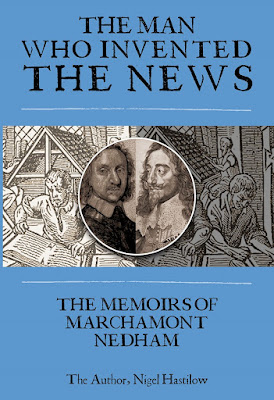
 Just 380 years after the outbreak of the English Civil War on August 22, 1642, the memoirs of the era’s most notorious, controversial and successful journalist are finally published. 

Marchamont Nedham, who was just 22 at the outbreak of war, became a newspaper pioneer, the most successful publisher of the era. 

In an era when “freedom of speech” did not exist, he was jailed three times, threatened twice with execution and once fled the country fearing he would be hung, drawn and quartered. 

He was as notorious in his day as journalists like Boris Johnson, Piers Morgan or Jeremy Clarkson are today. His “crimes” included attacking King Charles I, attacking Oliver Cromwell, attacking King Charles II. His other offences included: 

·        Revealing leaked Government documents;

·        Publishing illegal reports of Parliamentary debates;

·        Exposing greed and hypocrisy among Puritan MPs;

·        Condemning the politicians who executed the King;

·        Attacking the Scottish, the French and the Dutch.

Nedham’s memoirs are closely based on the 17th century newspaperman’s career. 

In an unrestrained age, when invective was as rife in print as it is on Twitter today, Nedham was a master of the well-aimed insult. 

He first wrote a newspaper in support of Parliament against the King; then a second backing the King against Parliament; his third was the official newspaper of the Cromwell dictatorship. Finally, he was employed writing for Charles II against the King’s political enemies. 

In the 17th century, newspapers were in their infancy. Nedham was a pioneer – the most successful journalist and editor of the era – yet he is relatively unknown today.

Historians accuse Nedham of inconsistency but they disregard his greater achievement – to write, print and distribute three successive weekly news-sheets over a turbulent period of 18 years from the outbreak of the civil war in 1642 to the restoration in 1660. 

The desire for news was insatiable and literacy was surprisingly widespread with about half the population of London able to read. 

News-books were not sold in vast numbers (1,000 copies a week costing one penny each was about average) but they were widely shared and read aloud in many places, especially among the armies involved in the war. Politicians tried many times to rein in the press. They wanted to control what was being reported and, at the same time, they wanted to use the press for their own ends. 

Marchamont Nedham’s writings on constitutional and political issues helped inspire the American revolution. Yet because his allegiances and his opinions shifted according to who he was working for, he has been dismissed by historians as a contemptible “triple-turncoat” of no great significance.

I would contend that there is nothing wrong with being a pen for hire and, in navigating his way through the deep, dark currents of the English Civil War, he not only kept his head above water but laid many of the foundations of journalism that we take for granted today. A martyr in the cause of free speech – jailed three times and fleeing for his life once – he was a pioneer whose importance to journalism should not remain as obscure as it has done for centuries.

Marchamont Nedham, who died of a heart attack in a London coffee house in 1678 aged 58, was belligerent to the end. His last publication was a robust attack on the French who, he said, were “those monkeys of mankind”. 

I have written his autobiography for him, taking the known facts about Nedham’s career and trying to stitch them together by filling in the gaps.

 www.themanwhoinventedthe.news

Tuesday, July 26, 2022

Just shut up about freedom of speech

Having just written a book (“The Man Who Invented The News”) about a journalist who was jailed three times and fled the country in fear of his life, I find I must support the campaign to free Julian Assange.

He would appear to be an unattractive man with a distinctly dodgy history but that is not a good enough reason to want to see him deported to America and incarcerated there for, quite probably, the rest of his life.

He published secret information which, according to the Americans, put people’s lives at risk. There’s not much to be said in favour of that – except that it’s a journalist’s job to reveal inconvenient truths. The alternative is an even more secret society than the one we live in most of the time.

The Wikileaks founder did reveal that thousands of civilians were killed during the wars in Afghanistan and Iraq – the sort of slaughter we rightly condemn Russia for today.

Did we have a right to know the information Wikileaks revealed? I would say we did. It is a journalist’s job to expose inconvenient, embarrassing or incriminating evidence if and when it becomes available. It does not seem reasonable to allow Assange’s extradition just so the Americans can get their revenge.

Hillary Clinton once asked of Assange: “Can’t we just take the guy out with a drone?’

In 1640s, Marchamont Nedham, the most notorious journalist of the English Civil War, leaked the contents of King Charles I’s private papers.

These revealed he had written to the King of France complaining about the behaviour of his sister, Henrietta Maria, Charles’s wife. They revealed the King’s determination not to negotiate with his Parliamentary enemies as well as his scathing private opinions of some of his closest aides.

Marchamont Nedham was jailed when he called the King a tyrant and mentioned that Charles spoke with a stammer. In those days, there was no such thing as ‘freedom of speech’ and journalists ran the risk of imprisonment with every newspaper they published. Later, Nedham was jailed again and eventually fled the country in 1660 in fear of being hanged, drawn and quartered.

Have we really made so little progress in almost 400 years?


https://www.youtube.com/watch?v=Ubknv_CxSUY


Monday, June 06, 2022

The birthday-cake coup

 In January I sent this email to my MP Nigel Huddleston:

Dear Mr Huddleston

Please do not fall for the propaganda and take part in the defenestration of Boris Johnson.

He has made some mistakes and the Conservative Party is betraying many of its grass roots supporters by its woke policies, tax rises, unquestioning support for the abominable NHS etc.

But - and it is a big but - he has done a good job over the vaccine rollout and, more to the point, getting rid of him is only worthwhile if the party has a better leader to take his place.

It emphatically does not.

Despite his shortcomings, those red wall MPs and others who are fearful of losing their seats unless they get rid of Mr Johnson should realise they will definitely lose their seats if they do get rid of him.

It is alleged MPs are overwhelmed with emails calling for him to be removed. Who from? His long-term opponents. Please stick with him. How can we endure this birthday-cake farce when the world is on the brink of another war?

Today I followed it up by saying:

Dear Mr Huddleston 

I sent you the email below in January. Nothing has changed except the war is now being fought and is liable to get worse. 

Please do not vote to oust the Prime Minister.


Tuesday, May 24, 2022

An open e-mail to Talk-Talk

 I have tried a dozen different ways to communicate with you and failed to get the message through that you have stopped giving me access to my accounts, you continued to send threatening emails demanding money I have been paying.

I informed you some time ago I no longer wanted to receive any 'service' from you and proposed to cancel my ransom payments of £5 a month. Today you send me a demand for £25. You cannot be serious.